
The ‘Big 4′ of ’70s One-Hit Wonders
There’s an unfair stigma that comes with being labeled a one-hit wonder. 99% of bands never come close to having commercial success, let alone a true hit. Dismissing an artist as being a one-hit wonder is like scoffing at somebody who only won the lottery once.
Sure, every musician would love to have the legacy and impact of someone like the Beatles, the Rolling Stones, Queen, Led Zeppelin, etc. But frankly, there’s absolutely no shame in being a one-hit wonder. In fact, there are lots of instances where that "one hit" has become such a powerful pop culture force that it connects with multiple generations of fans.
Such is the case for one-hit wonders from the 70s, many of whom find their songs still resonating with listeners today. This was an era that brought us everything from classic novelty hits like Carl Douglas’ “Kung Fu Fighting,” to folksy jaunts like Mungo Jerry’s “In the Summertime.”
Both of those memorable hits fell just short of making it into our Big 4 of One-Hit Wonders from the '70s. So who did make the cut? Scroll down to find out.
Pilot, 'Magic'
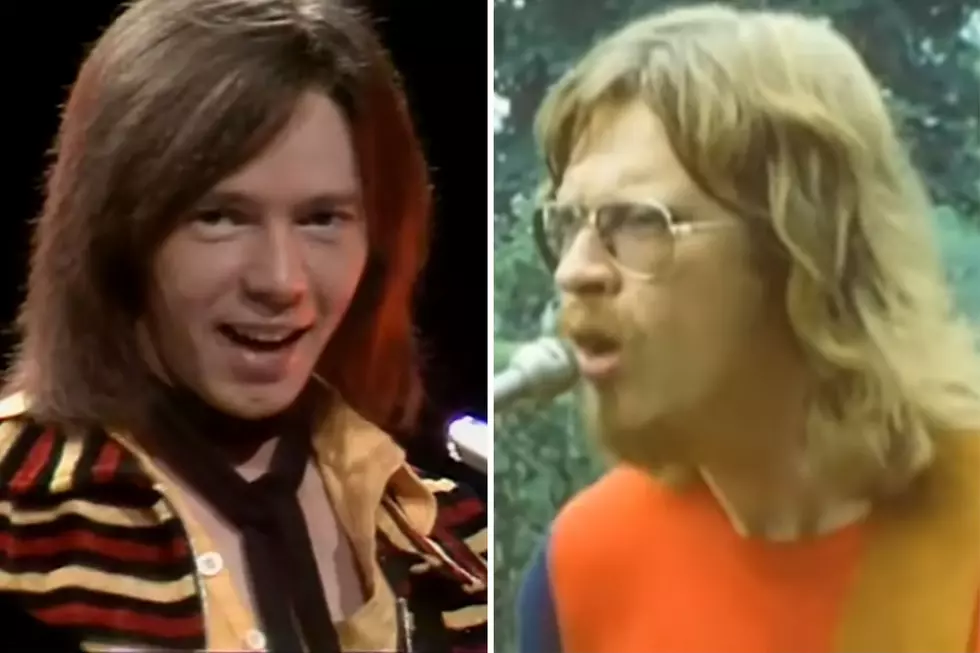
Scottish rocker David Paton bounced around a few bands early in his career, including a brief stint in Bay City Rollers. In 1973, he co-founded the group Pilot and released their debut album, From the Album of the Same Name, a year later. It featured the hit single “Magic,” which you can see the band performing (ok, miming) in the video below.
“I used to have a little tape recorder on top of my piano and when any idea came into my head I would just slap it down on the tape recorder,” Paton recalled in 2012, explaining how “Magic” came together. “I had that chorus and it's only a four bar chorus, technically. It's a four bar chorus and it was just an idea lying on the tape recorder. One morning I had to get up really early and my wife said to me I've never been awake to see a daybreak and I thought there's a line for a song that will go with that little chorus that I've got on my tape machine. So this is how it came about.”
Though Pilot scored a few more hits in the U.K., they never found further success in America. The group disbanded in ‘77, and Paton later enjoyed success working with the Alan Parsons Project, Kate Bush and Elton John.
Meanwhile, “Magic” proved to have plenty of staying power. It’s appeared in films like Happy Gilmore and Herbie Fully Loaded, pop star Selena Gomez enjoyed a minor hit with her cover of the tune in 2009, and weight loss drug Ozempic even opted to use it as their advertising theme song.
Wild Cherry, 'Play That Funky Music'
In the early ‘70s, Wild Cherry was a hard rock cover band. They were getting gigs, but not getting much traction with original material. “We were a heavy rock band in Pittsburg,” singer Rob Parissi later recalled to the Tampa Bay Times. “We played songs that would bring in the good looking girls. If we got the good-looking girls, the guys would be there. But the girls were starting to go to disco.”
Seeing the shift in trends, Parissi told his bandmates that they should start playing disco music. “They went nuts,” he remembered. “‘We don’t want to be in a disco band.’”
At one local bar, Wild Cherry was heckled by a few black patrons who asked, “Are you white boys gonna play some funky music?” The question proved prophetic. “I grabbed a drink order pad and started writing: Once I was a boogie singer, playin’ in a rock and roll band,” Parissi said. “It probably took me five minutes to write the whole thing.”
Released in April of 1976, “Play That Funky Music” still contained some of Wild Cherry’s earlier rock influences, but with enough soul to get listeners dancing. The single hit No. 1 on the Billboard Hot 100 later that year and sold more than 2.5 million copies in the U.S. alone.
Wild Cherry tried to replicate the formula of “Play That Funky Music” on their ensuing releases, but none of the songs clicked. They never scored another hit, and by 1979 the band had broken up.
Still, “Play That Funky Music” has remained a popular track with generations of listeners and has appeared in a wide variety of places, including such TV shows as Big Bang Theory, The Office, Ally McBeal and King of the Hill.
Ram Jam, 'Black Betty'
In 1977, rock group Ram Jam scored their lone mainstream hit with their frenetic rendition of “Ram Jam.” While the song was not their own – “Black Betty” was originally an African-American work song, later made famous by blues singer Lead Belly – Ram Jam frontman Bill Bartlett added new lyrics and gave the tune a fiery rock edge that had never been heard before.
Interestingly, the version of “Black Betty” that became a hit was actually recorded by a different band. “Ram Jam did not cut ‘Black Betty,’” Bartlett confirmed in a 2021 interview, noting that it was actually his previous group Starstruck that recorded the tune. But when producers heard the track, and its breakthrough potential, they had Bartlett assemble a new group of musicians, which would be called Ram Jam.
“My version is about Bettie Page,” Bartlett further noted. “She’s a pinup queen from the ‘50s. Bettie Page was my inspiration for writing the last two verses. I don’t know what Lead Belly was writing about. That’s up for anybody to guess. But I wrote the last two verses and the music, so I say it’s about Bettie Page.”
Even Ram Jam's "Black Betty" music video -- which you can see below -- wasn't exactly as it seemed. Bartlett is the only musician in the clip who actually performed on the song.
Ram Jam released a pair of studio albums, then broke up in 1978.
Stealers Wheel, 'Stuck in the Middle With You'
Scottish rock band Stealers Wheel was formed by school friends Joe Egan and Gerry Rafferty in the early ‘70s. When the group scored their first record deal, they received some unexpected inspiration.
"We signed a contract with a big American company and they threw a launch party in a chic restaurant in Chelsea,” Rafferty recalled. “There was a huge table with about 50 people there, record company executives and their wives, and musicians and their wives, and the wine was flowing. It was a boisterous evening, but I was sandwiched between two rather boring label executives and their wives. Two days later, Joe Egan and I sat down and we wrote that song in half an hour."
Stealers Wheel released their self-titled debut album, featuring “Stuck in the Middle With You,” in 1972. It took a while for the tune to catch fire – in fact, Rafferty actually left the band before it became popular. But in 1973 “Stuck in the Middle With You” reached the Billboard Top 10. With the single becoming an international hit, Rafferty returned to Stealers Wheel. The group toured the world and went on to release two further albums before breaking up in 1975.
While Stealers Wheel never again matched the heights of “Stuck in the Middle With You,” Rafferty later found success with solo career, including the hits “Baker Street” and “Right Down the Line.”
Top 100 Albums of the '70s
Gallery Credit: Michael Gallucci


